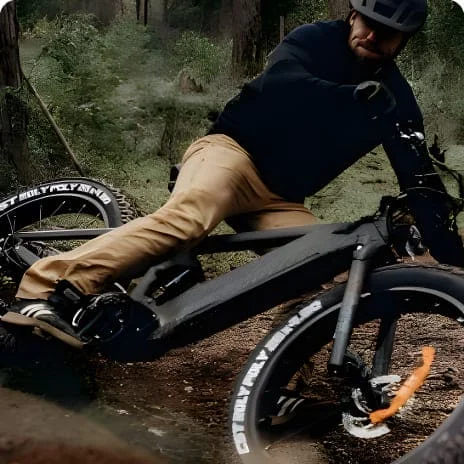
The first question comes before everything else: where will you ride? A bike for a daily run on city tarmac is not the bike for gravel and sand, or for evening rides along the corniche. Write down the three places you will ride most, and look for the bike that suits them, not the one that looks strongest on paper.
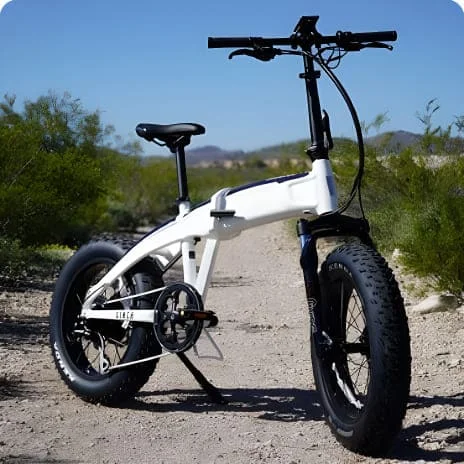
Then choose the frame. A step-through frame is easy to get on and off, and suits anyone riding in a thobe or an abaya or stopping often in town. A higher frame is a little stiffer on rough ground. A folding bike is a smart choice if it has to travel in the car or live in a small flat.
Look at the tyres next. Fat 4-inch tyres hold steady on sand and gravel and soak up bumps, but they are heavier and slower on tarmac. Narrower 27.5 or 28-inch tyres are lighter and quicker in the city, and a knobbly tread gives them grip on dirt.
The battery is the heart of an e-bike. Choose one that comes out of the frame so you can charge it indoors, and look at its capacity in watt-hours: the more it holds, the further you go, and the more it weighs and costs. Real range changes with the assist level, your weight, the road and the heat, so do not count on the biggest number in an advert.
Do not compromise on brakes: disc brakes stop with confidence on descents and in traffic. Pair them with a geared drivetrain that makes climbs easier, even with the motor helping.
Finally, the size. Stand over the bike with both feet on the ground and you should have comfortable clearance above the frame. When you set the saddle, your leg should be almost straight with the pedal at its lowest point. And budget for a helmet, a lock and a rear light from day one.